Thursday, June 13, 2019

EDITORIAL: Gov. Polis budget splurges on 5-year-old children


EDITORIAL: Gov. Polis budget splurges on 5-year-old children


The sucking sound of big state spending conjures visions of straws — the plastic kind politicians ban in California. Full Democratic command of Colorado, Republicans warn, makes us California East.
“Would you sign a bill banning plastic straws?” we asked Gov. Jared Polis during a phone conversation Tuesday. “Everyone is talking about it.”
“No one is talking about it,” the newly elected Democrat replied, chuckling at our expense, and declining to answer “yes” or “no.”
The businessman-turned-politician prefers small talk about that little matter of a $1.2 billion budget surplus generated by economic growth and the soaring housing market.
Because of rising home values, mill levies are generating more money for local schools and saving the state hundreds of millions that contribute to the surplus.
State law requires government return a percentage of surplus money directly to taxpayers, based on a boring formula involving population growth and inflation. Under that equation, the state will keep hundreds of millions this year.
It won’t build highways. Our new liberal governor — brace for it — would give these mega-millions to 5 year olds.
Seriously, it’s not an awful idea. Kindergarten-for-all would function like a major tax cut for tens of thousands of Colorado parents. Their children, Polis reminds us, comprise our economic future and tax base.
About 13,000 Colorado children skip kindergarten each year because their parents cannot afford tuition. Approximately 30,000 attend kindergarten at a cost to their parents of $400-$500 a month or more. Under Polis budget plan, all could attend and none would have to. It’s a decision for households to make, minus the economic obstacle.
Using surplus dollars, the governor’s budget includes $227 million to provide “full-day kindergarten to every child, instead of the half-day kindergarten the state currently funds.”
That means parents will have between $3,500 and $5,000 more to spend each year, or to save, on something other than kindergarten. Polis hopes they might invest it in other educational options for their kids, such as college tuition or business startups for themselves or their offspring.
Polis believes the $227 million will free up $100 million some school districts use to subsidize full-day kindergarten. They can redirect that money to increase teacher pay and reduce class sizes, he explains.
Bull markets don’t last forever, so Polis proposes putting $90 million of surplus cash in the general fund’s reserve account and $92 million in the state education fund’s savings account.
To begin delivering on health care, the Polis budget sets aside $1.3 million to design a program that would allow Colorado to import lower-priced prescription drugs from Canada. He proposes a Saving People Money on Healthcare Office through the lieutenant governor’s office, to help Coloradans buy insurance through the state. We will analyze the governor’s health care policies more in detail as they transpire.
We would prefer surplus money first go to upgrade deteriorating highways and bridges. But that’s not what Polis ran on. He promised kindergarten and health care, and won by a commanding 10.7 percent margin. Voters made their wishes clear by electing him, while trouncing two ballot measures to fund transportation — one with a tax increase; the other with debt and general fund revenues.
The governor wastes no time trying to deliver on his two most high-profile campaign items. He insists these measures will grow the economy and we hope he is right.
In addition to health care and kindergarten, then-candidate Polis promised pursuit of a 3 to 5 percent income-tax reduction. Given the tax-cutting goal, voters should balk if Polis, legislators or petitioners propose another tax to fix our roads.
Yet, our roads are dangerous, deadly and inefficient. Polis and the Legislature must find a way to fix them at a much faster pace, without new taxes, regardless of commitments to health care and education. That means making difficult decision and dedicating any additional growth in the surplus to transportation first. Lead the way to a transportation system appropriate for the 21st century.
Grow the surplus, not the tax rate, and make Colorado the shining example economic growth benefiting all. Make it the non California, with “California East” a strawman the past.

Exclusive: The Pentagon’s Massive Accounting Fraud Exposed

How US military spending keeps rising even as the Pentagon flunks its audit.


Wednesday, June 12, 2019

Judging by Mueller's staffing choices, he may not be very interested in justice

Judging by Mueller's staffing choices, he may not be very interested in justice 


Judging by Mueller's staffing choices, he may not be very interested in justice


Much
has been written about the prosecutorial prowess of Robert Mueller’s
team assembled to investigate allegations of Russia’s involvement in the
Trump campaign. Little has been said of the danger of prosecutorial
overreach and the true history of Mueller’s lead prosecutor.

What
was supposed to have been a search for Russia’s cyberspace intrusions
into our electoral politics has morphed into a malevolent mission
targeting friends, family and colleagues of the president. The Mueller
investigation has become an all-out assault to find crimes to pin on
them — and it won’t matter if there are no crimes to be found. This team
can make some.

Many Americans despise President Trump and anyone
associated with him. Yet turning our system of justice into a political
weapon is a danger we must guard against.

Think back to April 1, 1940, and a world awash in turmoil, hate and fear. Revered Attorney General Robert H. Jackson assembled
the United States attorneys. In remarks enshrined in the hearts of all
good prosecutors, he said, “The citizen's safety lies in the prosecutor
who tempers zeal with human kindness, who seeks truth and not victims,
who serves the law and not factional purposes, and who approaches his
task with humility.”

Yet Mueller tapped a different sort of
prosecutor to lead his investigation — his long-time friend and former
counsel, Andrew Weissmann. He is not just a “tough” prosecutor. Time
after time, courts have reversed Weissmann’s most touted “victories” for his tactics. This is hardly the stuff of a hero in the law.

Weissmann, as deputy and later director of the Enron Task Force, destroyed the
venerable accounting firm of Arthur Andersen LLP and its 85,000 jobs
worldwide — only to be reversed several years later by a unanimous Supreme Court.

Next,
Weissmann creatively criminalized a business transaction between
Merrill Lynch and Enron. Four Merrill executives went to prison for as
long as a year. Weissmann’s team made sure they did not even get bail pending their appeals, even though the charges Weissmann concocted, like those against Andersen, were literally unprecedented.

Weissmann’s prosecution devastated
the lives and families of the Merrill executives, causing enormous
defense costs, unimaginable stress and torturous prison time. The 5th
Circuit Court of Appeals reversed the mass of the case.

Weissmann quietly resigned from the Enron Task Force just as the judge in the Enron Broadband prosecution began excoriating Weissmann’s team and the press began catching on to Weissmann’s modus operandi.

Mueller knows this history. Is this why he tapped Weissmann to target Paul Manafort?

As Attorney General Jackson foretold:
“Therein is the most dangerous power of the prosecutor: that he will
pick people that he thinks he should get, rather than pick cases that
need to be prosecuted.”

Manafort, a Trump associate, is simply a
small step in Weissmann’s quest to impugn this presidency or to reverse
the results of the 2016 election. Never mind that months of
investigation by multiple entities have produced no evidence of
"collusion." Mueller’s rare, predawn raid of Manafort’s home — a
fearsome treat usually reserved for mobsters and drug dealers — is
textbook Weissmann terrorism. And of course, the details were leaked —
another illegal tactic.

Weissmann is intent on indicting Manafort.
It won’t matter that Manafort knows the Trump campaign did not collude
with the Russians. Weissman will pressure Manafort to say whatever
satisfies Weissmann’s perspective. Perjury is only that which differs
from Weissmann’s “view” of the “evidence” — not the actual truth.

We
all lose from Weissmann’s involvement. First, the truth plays no role
in Weissmann’s quest. Second, respect for the rule of law, simple
decency and following the facts do not appear in Weissmann’s playbook.
Third, and most important, all Americans lose whenever our judicial
system becomes a weapon to reward political friends and punish political
foes.

It is long past the due date for Mueller to clean up his
team — or Weissmann to resign — as a sign that the United States is a
nation of laws that are far more important than one Weissmann.

Wednesday, June 5, 2019

Transgenderism vs. Free Speech in BC

Transgenderism vs. Free Speech in BC


Transgenderism vs. Free Speech in BC


The British Columbia Human Rights Tribunal (BCHRT) recently decided a case involving a flyer distributed by a street preacher, William Whatcott,
challenging the candidacy for provincial office of a man who identified
publicly as a woman. Whatcott apparently handed out 1500 flyers on
street corners, stuffed them in mailboxes, taped them to doors and even
put a copy on the internet, things that many political campaigners do
today.


Whatcott’s
target was Morgane Oger, a trans-woman running for the leftist New
Democratic Party (NDP) in the 2017 British Columbia election. His flyer
(“Transgenderism vs. Truth in Vancouver-False Creek”) exposed Oger’s
claim to be “a woman born into a male body” as fraudulent. “The truth”
he said, “is there are only two genders, male and female and they are
God-given and unchangeable. Morgan’s DNA will always be male, he will
never have a uterus and no amount of cosmetic surgery, fake hormones, or
media propaganda is going to be able to change these facts.” He
concluded by calling on people not to vote for the Oger or the NDP.


Oger lost the election.


Oger
then filed a complaint with the BCHRT, alleging the flyer violated
section 7 of the Provincial Human Rights Code which, among other things,
prohibited publication of any statement that “indicates discrimination
or an intention to discriminate.” Whatcott defended by denying that the
flyer violates s. 7 and contended that the section itself violates the
Charter’s freedom of speech and religion guarantees along with his right
to distribute it, which is especially important given the electoral
context in which it was disseminated.


A
panel of three concluded, against Whatcott, that the flyer “indicated
an intention to discriminate against Ms. Oger and is likely to expose
her and other transgender people to hatred or contempt.” Whatcott was
ordered to pay Oger $35,000 plus $20,000 in costs. As he is penurious,
the likelihood is that neither amount will ever be paid, and he will
face jail time.


The
panel held that Whatcott discriminated against Oger by stating that
transgenderism is “immoral,” and that “[t]o cast a transgender person as
immoral purely because of their gender identity is the very essence of
discrimination.” It held that the discrimination was “severe,” that it
was “intentional and designed to interfere with her participation in the
political life of this province.” Drawing on “the most insidious myths
about transgender people,” it admonished the electorate to conclude that
Oger “was by sole virtue of her gender identity, unsuitable for public
office.” Oger claimed “the discrimination was ongoing,” that its effects
are “never going to go away,” and that the indignity she suffered “was a
direct result of the discrimination.”


What
particularly bothered the BCHRT was not that by publicly distributing
the flyer Whatcott created a danger of “imminent lawless action,” or a
clear and present danger -- only that the flyer’s message was
“unacceptable.” Its objections were strictly to the flyer’s substance,
especially to its warning to recipients that transgenders and their
allies might die a second death in Revelation 2:8’s “fire lake,” and its
call to action urging them to tell NDP campaigners that “you won’t vote
for them because you believe in God’s definition of gender and
marriage.” In point of fact, the Tribunal’s objections were strictly
viewpoint-based. If the flyer would have supported transgenderism or
urged people to vote for Oger and the NDP, it would obviously have
passed muster.


The
tribunal found the flyer’s message despicable but was it
“discriminatory?” Citing biblical passages in support of one’s political
preferences or calling on people to vote a for or against a candidate
are not normally considered punishable acts. If they were, the first
would impugn the sermons of almost any evangelical pastor or Muslim
Imam, and the second, almost any political campaigner.


The
tribunal also said that the flyer is but a “modern version of a whites
only sign...an attempt to block the doors of government with the message
that the political realm is for ‘cisgender people only.’” This analogy
reveals more than intended, for it casts Whatcott’s flyer not as the
work of the private individual he is, but as an order of a duly
authorized and empowered state official he isn’t.


Consider
the following: if, without your permission Whatcott put a sign in the
front of your house which says “whites only” would it have the legal
effect of preventing non-whites from entering your premises? Or a sign
saying “cisgender people only” on the front door of the city hall?
Obviously neither sign would carry any legal weight requiring obedience,
and the reason they wouldn’t is the reason why the panel’s entire
“discrimination” argument fails.


We
know what it means to say a state official, ruling, or law
“discriminates” against an individual or a group -- it occurs every time
a state official, policy, or law advantages or disadvantages one
individual or group over another by the exercise of its legal power. And
we know what it means to say a hotel, restaurant owner, or landlord
illegally discriminates against potential customers or tenants by
refusing them service or accommodations; but what does mean to say that
the speech of a private individual like Whatcott, who lacks even the
authority or power of a landlord, is “discriminatory” in any sense other
than the most trivial and nonpunitive? (E.g., “I don’t like [choose
your favorite “vulnerable” group]; I prefer to hang with Asians.” I am
“discriminating” here; should I be forced to hang with you?)


The
ultimate irony in the tribunal’s discrimination argument is that it
isolates the wrong target, for while Whatcott’s public statements carry
no authoritative “discriminatory” weight, those of the tribunal’s
members do, and, what’s more, they carry the police power of the state
to enforce them.


The
tribunal falls back on the claim that, even if unsuccessful, Whatcott
still violated the code because he “intended” to discriminate against
Oger. However, its argument for this proposition depends on the
ludicrous proposition that he should be punished for intending something
he couldn’t plausibly accomplish.


I
conclude: Whatcott’s words discriminated against no one in any sense
other than the most trivial. Nor was any evidence submitted to show they
caused anyone to discriminate against anyone else. Unfortunately, the
same cannot be said for the court, which used its legal authority to
discriminate against him, his allies, his religious, educational, and
political messages, and anyone else holding similar views. So much for
Canada’s vaunted free expression “guarantee.” Its message to Canadians
is: “say what we want or shut up altogether.”

Global Warming: Media Ignore Sharp Drop In Global Temperatures Over Past Two Years

Global Warming: Media Ignore Sharp Drop In Global Temperatures Over Past Two Years


Don't Tell Anyone, But We Just Had Two Years Of Record-Breaking Global Cooling

Inconvenient Science: NASA data show that global temperatures dropped
sharply over the past two years. Not that you'd know it, since that
wasn't deemed news. Does that make NASA a global warming denier?


Writing in Real Clear Markets,
Aaron Brown looked at the official NASA global temperature data and
noticed something surprising. From February 2016 to February 2018,
"global average temperatures dropped by 0.56 degrees Celsius." That, he
notes, is the biggest two-year drop in the past century.


"The 2016-2018 Big Chill," he writes, "was composed of two Little
Chills, the biggest five month drop ever (February to June 2016) and the
fourth biggest (February to June 2017). A similar event from February
to June 2018 would bring global average temperatures below the 1980s average."


Isn't this just the sort of man-bites-dog story that the mainstream media always says is newsworthy?


In this case, it didn't warrant any news coverage.


In fact, in the three weeks since Real Clear Markets ran Brown's
story, no other news outlet picked up on it. They did, however, find
time to report on such things as tourism's impact on climate change, how
global warming will generate more hurricanes this year, and threaten
fish habitats, and make islands uninhabitable. They wrote about a UN
official saying that "our window of time for addressing climate change is closing very quickly."


Reporters even found time to cover a group that says they want to
carve President Trump's face into a glacier to prove climate change "is
happening."


In other words, the mainstream news covered stories that repeated
what climate change advocates have been saying ad nauseam for decades.


That's
not to say that a two-year stretch of cooling means that global warming
is a hoax. Two years out of hundreds or thousands doesn't necessarily
mean anything. And there could be a reasonable explanation. But the drop
in temperatures at least merits a "Hey, what's going on here?" story.


What's more, journalists are perfectly willing to jump on any individual weather anomaly — or even a picture of a starving polar bear
— as proof of global warming. (We haven't seen any stories pinning
Hawaii's recent volcanic activity on global warming yet, but won't be
surprised if someone tries to make the connection.)


We've noted this refusal to cover inconvenient scientific findings many times in this space over the years.


Hiding The Evidence

There was the study published in the American Meteorological Society's Journal of Climate showing that climate models exaggerate global warming from CO2 emissions by as much as 45%. It was ignored.


Then there was the study in the journal Nature Geoscience
that found that climate models were faulty, and that, as one of the
authors put it, "We haven't seen that rapid acceleration in warming
after 2000 that we see in the models."


Nor did the press see fit to report on findings from the University of Alabama-Huntsville showing that the Earth's atmosphere appears to be less sensitive to changing CO2 levels than previously assumed.


How about the fact that the U.S. has cut CO2 emissions over the past 13 years faster than any other industrialized nation? Or that polar bear populations are increasing? Or that we haven't seen any increase in violent weather in decades?


Crickets.


Reporters no doubt worry that covering such findings will only
embolden "deniers" and undermine support for immediate, drastic action.


But if fears of catastrophic climate change are warranted — which we
seriously doubt — ignoring things like the rapid cooling in the past two
years carries an even bigger risk.


Suppose, Brown writes, the two-year cooling trend continues. "At some
point the news will leak out that all global warming since 1980 has
been wiped out in two and a half years, and that record-setting events
went unreported."


He goes on: "Some people could go from uncritical acceptance of
steadily rising temperatures to uncritical refusal to accept any warming
at all."


Brown is right. News outlets should decide what gets covered based on
its news value, not on whether it pushes an agenda. Otherwise, they're
doing the public a disservice and putting their own already shaky
credibility at greater risk.

Wednesday, October 31, 2018

Two men hope to make Colorado the first state to redistribute income

Two men hope to make Colorado the first state to redistribute income 


Two men hope to make Colorado the first state to redistribute income

DENVER
— Two Denver-area activists are looking to make Colorado one of the
first states to test a theory that the redistribution of income empowers
the poor and leads them to contribute positively to the economy.


Kevin Neal Patterson II, the son of Connect for Health Colorado Chief
Executive officer Kevin Patterson, and Eric Leveridge, a policy analyst
for United for a New Economy (UNE), have filed more than a dozen ballot proposals hoping to change the state’s constitution so that those earning above $300,000 per year will pay a much higher income tax.


That money would then be redistributed to anyone who qualifies for
the Earned Income Tax Credit, generally those who earn under $70,000.


UNE was involved in raising Colorado’s minimum wage.


The idea of direct cash payments, however, doesn’t belong to
Patterson and Leveridge, instead, the timing of the filings very closely
coincides with the release of Facebook co-founder Chris Hughes’ new
book, Fair Shot, which outlines his idea that wage earners in the top 1 percent should pay the way for those less fortunate.


Hughes calls the plan Guaranteed Income. Variations of the idea have
been put forth as far back as the 1960s by Martin Luther King Jr. and
economist Milton Friedman.


Hughes’ organization The Economic Security Project is currently funding a pilot project to test the idea in Stockton, Calif. known as Stockton Economic Empowerment Demonstration (SEED).


SEED will begin giving qualifying residents of Stockton $500 per
month later this year to help stimulate the economy and help low income
residents out of poverty, the projects website says.


Hughes said in a 2016 blog:


“Put simply, in a time when all other economic stimulus tools have
been tried or filibustered and median incomes have not budged, cash
transfers could be the necessary spark to improve the standard of living
of American households.”


The two Colorado men have their own histories of involvement in social causes. Leveridge’s biography on the UNE website
says he has a passion for “economic justice.” He is originally from
Oklahoma and started his career as an immigration law and policy and
international human rights attorney. He moved to Denver in 2015.


Patterson’s Facebook page depicts multiple Black Lives Matters protests and events across the county that he has either attended or helped organize.


All the proposals have either already had their titles set or are being reviewed by the Legislative Council staff.
 They are all similar in that the new taxes would pay for a tax credit
program outlining a $2,000 refundable tax credit — either monthly or in
one lump sum — for taxpayers who qualify for the Earned Income Credit.


The differences include:


  • Changing the income tax amount from a flat 4.63 percent paid by all
    Coloradans to 9.87 percent for those earning more than $300,000.
  • Changing the income tax amount from a flat 4.63 percent paid by all
    Coloradans to 11.8 percent for those earning more than $500,000.
  • How much can be retained by the state to pay for the program.
  • Allowing the tax credit to qualified caregivers.
  • Allowing the tax credit to students.
Neither Leveridge nor Hughes returned requests for comment. Patterson II could not be reached.


Before his current idea of increasing taxes on the 1-percenters,
Hughes outlined a carbon tax to pay for the idea and pointed to the Bush
administration during the recession as inspiration and proof his idea
would work.


“Fortunately, in the United States there is recent precedent for
helicopter money’s effectiveness and bipartisan appeal,” Hughes said in
his blog. “In the spring of 2008 as the country teetered on the brink of
what would become the Great Recession, a bipartisan majority in
Congress approved a rebate plan that George W. Bush signed into law.
Over the course of the spring of that year, all American adults making
less than $75,000 received a check for $600 in the mail. While it wasn’t
enough to stave off the recession, research in following years showed
that it was a powerful boost to the economy with between 50 and 90
percent of the funds being spent by recipients, much of it on durable
goods.”


Hughes said on his Twitter account that abolishing income inequality
is a top priority for him: “I spend most of time thinking about how to
combat income inequality through the guaranteed income.”

The 14th Amendment to the United States Constitution

The 14th Amendment to the United States Constitution - Fourteenth Amendment - anchor babies and birthright citizenship - interpretations and misinterpretations - US Constitution


Original intent of the 14th Amendment

The 14th Amendment to the U.S. Constitution reads in part:


"All persons born or naturalized in the United States, and subject to
the jurisdiction thereof, are citizens of the United States and the
State wherein they reside."
Babies born to illegal alien mothers within U.S. borders are called anchor babies
because under the 1965 immigration Act, they act as an anchor that
pulls the illegal alien mother and eventually a host of other relatives
into permanent U.S. residency. (Jackpot babies is another term).


The United States did not limit immigration in 1868 when the Fourteenth
Amendment was ratified. Thus there were, by definition, no illegal
immigrants and the issue of citizenship for children of those here in
violation of the law was nonexistent. Granting of automatic citizenship
to children of illegal alien mothers is a recent and totally inadvertent
and unforeseen result of the amendment and the Reconstructionist period
in which it was ratified.


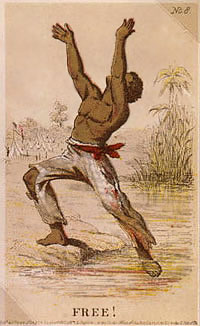
Free!
Post-Civil War reforms focused on injustices to African Americans. The 14th
Amendment was ratified in 1868 to protect the rights of native-born
Black Americans, whose rights were being denied as recently-freed
slaves. It was written in a manner so as to prevent state governments
from ever denying citizenship to blacks born in the United States. But
in 1868, the United States had no formal immigration policy, and the
authors therefore saw no need to address immigration explicitly in the
amendment.


Senator Jacob Howard worked closely with Abraham Lincoln in drafting and
passing the Thirteenth Amendment to the United States Constitution,
which abolished slavery. He also served on the Senate Joint Committee on
Reconstruction, which drafted the Fourteenth Amendment to the United
States Constitution. In 1866, Senator Jacob Howard clearly spelled out
the intent of the 14th Amendment by stating:


"Every person born within the limits of the United States, and subject
to their jurisdiction, is by virtue of natural law and national law a
citizen of the United States. This will not, of course, include persons
born in the United States who are foreigners, aliens, who belong to the
families of ambassadors or foreign ministers accredited to the
Government of the United States, but will include every other class of
persons. It settles the great question of citizenship and removes all
doubt as to what persons are or are not citizens of the United States.
This has long been a great desideratum in the jurisprudence and
legislation of this country."
This understanding was reaffirmed by Senator Edward Cowan, who stated:


"[A foreigner in the United States] has a right to the protection of the
laws; but he is not a citizen in the ordinary acceptance of the
word..."
The phrase "subject to the jurisdiction thereof" was intended
to exclude American-born persons from automatic citizenship whose
allegiance to the United States was not complete. With illegal aliens
who are unlawfully in the United States, their native country has a
claim of allegiance on the child. Thus, the completeness of their
allegiance to the United States is impaired, which therefore precludes
automatic citizenship.


Supreme Court decisions

The correct interpretation of the 14th Amendment is that an illegal alien mother is subject to the
jurisdiction of her native country, as is her baby.


Over a century ago, the Supreme Court appropriately confirmed this
restricted interpretation of citizenship in the so-called
"Slaughter-House cases" [83 US 36 (1873) and 112 US 94 (1884)]13. In the 1884 Elk v.Wilkins case12,
the phrase "subject to its jurisdiction" was interpreted to exclude
"children of ministers, consuls, and citizens of foreign states born
within the United States." In Elk, the American Indian claimant
was considered not an American citizen because the law required him to
be "not merely subject in some respect or degree to the jurisdiction of
the United States, but completely subject to their political
jurisdiction and owing them direct and immediate allegiance."


The Court essentially stated that the status of the parents determines
the citizenship of the child. To qualify children for birthright
citizenship, based on the 14th Amendment, parents must owe "direct and
immediate allegiance" to the U.S. and be "completely subject" to its
jurisdiction. In other words, they must be United States citizens.


Congress subsequently passed a special act to grant full citizenship to
American Indians, who were not citizens even through they were born
within the borders of the United States. The Citizens Act of 1924,
codified in 8USCSß1401, provides that:


The following shall be nationals and citizens of the United States at birth:

(a) a person born in the United States and subject to the jurisdiction thereof;

(b) a person born in the United States to a member of an Indian, Eskimo, Aleutian, or other aboriginal
tribe.
In 1898, the Wong Kim Ark Supreme Court case10,11, 16 once again, in a ruling based strictly on the 14th
Amendment, concluded that the status of the parents was crucial in
determining the citizenship of the child. The current misinterpretation
of the 14th Amendment is based in part upon the presumption that the Wong Kim Ark ruling encompassed illegal aliens. In fact, it did not address the children of illegal aliens and non-immigrant aliens, but rather determined an allegiance for legal immigrant parents based on the meaning of the word domicil(e). Since it is inconceivable that illegal alien parents could have a legal
domicile in the United States, the ruling clearly did not extend
birthright citizenship to children of illegal alien parents. Indeed,
the ruling strengthened the original intent of the 14th Amendment.


The original intent of the 14th Amendment was clearly not to
facilitate illegal aliens defying U.S. law and obtaining citizenship for
their offspring, nor obtaining benefits at taxpayer expense.
Current estimates indicate there may be between 300,000 and 700,000
anchor babies born each year in the U.S., thus causing illegal alien
mothers to add more to the U.S. population each year than immigration
from all sources in an average year before 1965. (See consequences.)


American citizens must be wary of elected politicians voting to
illegally extend our generous social benefits to illegal aliens and
other criminals.


For more information, see:


1.   P.A. Madison, Former Research Fellow in Constitutional Studies, The UnConstitutionality of Citizenship by Birth to Non-Americans (February 1, 2005)


2.   Madeleine Pelner Cosman, Ph.D., Esq., Illegal Aliens and American Medicine The Journal of the American Physicians and Surgeons, Volume 10 Number 1 (Spring 2005)


3.   Al Knight, Track 'anchor babies', Denver Post (September 11, 2002)


4.   Al Knight, Change U.S. law on anchor babies, Denver Post (June 22, 2005)


5.   Tom DeWeese, The Mexican Fifth Column (January 27, 2003)


6.   Anchor Babies: The Children of Illegal Aliens (Federation for American Immigration Reform)


7.   Tom DeWeese, "The Outrages of the Mexican Invasion" (American policy Center)


8.   P.A. Madison, Alien Birthright Citizenship: A Fable That Lives Through Ignorance The Federalist Blog (December 17, 2005)


9.   Dr. John C. Eastman, Professor of Law, Chapman University School of Law,
Director, The Claremont Institute Center for Constitutional Jurisprudence,
Dual Citizenship, Birthright Citizenship, and the Meaning of Sovereignty
-
Testimony, U.S. House of Representatives, Committee on the Judiciary,
Subcommittee on Immigration, Border Security and Claims (September 29, 2005)


10.   William Buchanan, HR-73 -- Protecting America's Sovereignty, The Social Contract (Fall, 1999) - includes discussion of the related Wong Kim Ark 1898 Supreme Court case


11.   Charles Wood, Losing Control of the Nation's Future -- Part Two -- Birthright Citizenship and Illegal Aliens, The Social Contract (Winter, 2005) - includes discussion of the related Wong Kim Ark court case


12.   U.S. Supreme Court ELK v. WILKINS, 112 U.S. 94 (Findlaw, 1884)


13.   U.S. Supreme Court Slaughter-House cases ('Lectric Law Library, 1873)


14.   Jacob M. Howard, Wikipedia.


15.   A
Century of Lawmaking for a New Nation: U.S. Congressional Documents and
Debates, 1774 - 1875 Congressional Globe, Senate, 39th Congress, 1st
Session Page 2890 of 3840
.


16.   United States v. Wong Kim Ark, 169 U.S. 649 (1898), Justia.com.